


Dungeons & Dragons 5e is still the most-played tabletop RPG by a wide margin, and Pathfinder 2e is still a clear second. Call of Cthulhu 7e leads everything outside fantasy. The real movement is below that: Daggerheart, Shadowdark and the Cosmere RPG all built real momentum between 2024 and 2026. Below is the full ranking, what each system feels like to run, and which numbers you should trust.
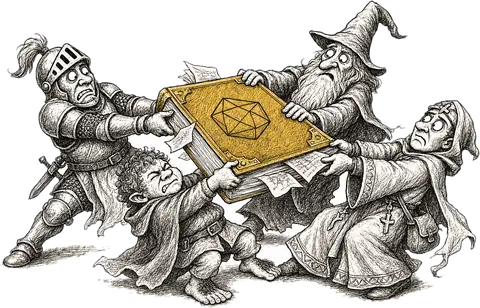
Some of our GMs run three weekly games across multiple systems. Shelves full of rulebooks for a dozen more they've run exactly once. And every year the same question surfaces in the group chat, usually right after a campaign wraps: "so what are we playing next?"
How this ranking was put together
There's no single authoritative source for TTRPG popularity. The best one this hobby ever had, Roll20's Orr Report, stopped publishing after Q4 2021, and nothing has replaced it. So rather than lean on one figure, this ranking triangulates three datasets, each collected independently, by a different method:
- Foundry VTT's 2025 Year in Review reports install share among license owners: D&D 5e 64.28%, Pathfinder 2e 30.52%, Pathfinder 1e 4.32%. Owners install 2.78 systems on average, so these don't sum to 100 and aren't market share. The $50 paid license also skews the base toward tool-savvy GMs, which almost certainly inflates crunchy tactical systems. Even with these caveats, the number is a useful signal.
- Gen Con 2026's scheduled events, from the public event catalog for the con running July 30 to August 2: D&D 1,751, Pathfinder 320, Starfinder 267, Call of Cthulhu 247, spread across more than 6,700 sessions and 500-plus listed systems. Open the catalog and you can count it yourself. Precision is soft at the edges though. "Advanced Dungeons & Dragons" (45 events) is filed separately from D&D, and a handful of systems show up under two spellings, so trust the order and the order of magnitude, not the last two digits.
- A player poll of about 27,500 votes run by Bob World Builder in May 2026, one favorite per person with write-ins allowed. Self-selected YouTube audience, so it over-represents buzzy newer games. The ballot split D&D by edition, 2014 and 2024 as separate options, while pooling every Pathfinder edition into one. So the top single option was D&D 5e (2014) at 3,267 votes, Pathfinder just behind at 3,081, and the 2024 edition adding another 2,553. Add D&D's editions back together and it clears Pathfinder by more than two to one.
Three different methods. Their biases pull in different directions, and they still land on the same rank order at the top. If a number can't be traced to someone who actually collected it, it isn't in here. I'll take that over one precise-sounding percentage.
About the ranking itself: this list is ordered by installed base and sustained play (how many people are actually running each system), not by how many books a system sold in its first week. A game can debut to enormous sales and still have very few active tables, so where a newcomer's buzz outruns its table presence, I say so.
The systems at a glance
| # | System | Genre | Best For | Complexity | Where the evidence puts it |
|---|---|---|---|---|---|
| 1 | D&D 5e (2024) | Heroic fantasy | New players, maximum support | Medium | #1 in all three datasets, not close |
| 2 | Pathfinder 2e | Tactical fantasy | Build-crafters, tactical combat | High | Clear #2 in play; publisher under financial strain |
| 3 | Daggerheart | Cinematic fantasy | Story-forward groups | Medium | 150 Gen Con 2026 events; strong first-year adoption |
| 4 | Call of Cthulhu 7e | Cosmic horror | One-shots, investigation | Low-Medium | Top non-fantasy system; heavy convention presence |
| 5 | Starfinder 2e | Science fantasy | Sci-fi with organized play | High | Core trio shipped 2025; 267 Gen Con 2026 events, near Pathfinder |
| 6 | Blades in the Dark | Industrial fantasy crime | Low-prep GMs | Medium | Small player base, outsized design influence |
| 7 | Shadowdark | Old-school fantasy | Fast, lethal dungeon play | Low | 4 Gold ENNIEs, ~$4M across two campaigns |
| 8 | Vampire: The Masquerade 5e | Personal/urban horror | Political intrigue | Medium | Steady; 6th Edition announced at Gen Con 2026, open alpha live |
| 9 | Cosmere RPG | Epic fantasy (Sanderson) | Cosmere readers | Medium-High | Record Kickstarter; just 21 Gen Con events, table share unproven |
| 10 | OSR (DCC, OSE, Dolmenwood) | Old-school fantasy | Minimal-prep sandbox play | Low | Collectively significant, individually fragmented |
1. Dungeons & Dragons 5e (2024 revision)

- Genre: Heroic fantasy
- Best for: New players, groups wanting the deepest adventure library, GMs who need players to already know the rules
- Complexity: Medium
What the evidence says: First in all three datasets by a margin nothing approaches. 64.28% Foundry install share, 1,751 Gen Con 2026 events, largest bloc in the 2026 poll.
D&D leads for a reason that has almost nothing to do with game design. Network effects. Your players have heard of it, YouTube has ten thousand hours of tutorials, and the local store runs Adventurers League on Wednesdays. Ask how to get into this hobby and the answer is D&D, which stays true because it keeps being the answer.
The 2024 revision is a polish pass. Subclasses reorganized, feats improved, ambiguities cleaned up, backward compatibility preserved. Wizards called the 2024 Player's Handbook the fastest-selling D&D product ever. Days later, ICv2's BookScan-style tracking reported roughly 3,773 physical copies in its first tracked week. Both claims got published, and they genuinely conflict. The honest read is that "fastest-selling" leans hard on pre-orders and digital bundling. Adoption does look real, though: by late 2025 WotC reported 2024-rules character creation on D&D Beyond had overtaken 2014-rules creation.
You get a system everyone already speaks. You don't get much surprise.
2. Pathfinder 2e

- Genre: Tactical fantasy
- Best for: Build theorycrafters who treat combat as a puzzle, and anyone frustrated by loose 5e math
- Complexity: High
What the evidence says: 30.52% Foundry install share, 320 Gen Con 2026 events, consistent second in the 2026 poll. Popular to play, financially squeezed to publish.
Start with the three-action economy, still the best combat innovation in mainstream fantasy RPGs. Three actions a turn, spend them how you like: Move, Strike, cast, Raise a Shield, Demoralize. Every turn is a decision instead of a checklist. Class, ancestry, skill and general feats arrive on staggered levels, so two fighters built to the same concept genuinely play differently. And all the rules are free at Archives of Nethys. Nobody else in the top three matches that.
Then there's the part most rankings skip. On June 8, 2026, Paizo CEO Jim Butler published a restructuring announcement: the company lost nearly $2 million in the prior fiscal year, is laying off 12 employees, and is restructuring Organized Play. The cause was largely the January 2025 bankruptcy of distributor Diamond Comics, which left roughly $10 million of Paizo inventory tangled in litigation. Direct retail sales grew. It wasn't enough. New Foundry module development for organized-play content is paused because sales didn't cover costs.
Pathfinder tables are fine. The company publishing for them is the part under strain, and those two facts are worth keeping apart when you read the doom threads.
3. Daggerheart

- Genre: Cinematic fantasy
- Best for: Story-forward groups, tables leaving 5e who want less bookkeeping, GMs happy to hand players narrative control
- Complexity: Medium
What the evidence says: Sold out its first print run in about two weeks and reprinted repeatedly into 2026. Over 500,000 characters created on Demiplane, and 150 Gen Con 2026 events.
Daggerheart launched May 20, 2025 and sold out its print run worldwide in about two weeks. Partly a supply story. But shortages persisted through repeated reprints into March 2026, and that's a demand story. Duality dice (Hope and Fear rolled together, one deciding the tone of the result) give the GM a built-in rhythm for when to press and when to give.
The roadmap keeps shipping, too, which is what moves this out of hype-spike territory for me. Class Packs landed April 21, 2026. The first big expansion, Hope & Fear, is dated August 25, 2026 on Critical Role's channels and late September for wider trade.
Enthusiasm has cooled from the viral launch period, and you'll find threads saying so. Cooled from viral is still very warm. Keep it in proportion, though: Daggerheart is a genuine hit, and Pathfinder still has many times more active tables.
4. Call of Cthulhu (7th Edition)

- Genre: Cosmic horror investigation
- Best for: Groups tired of combat-centric play, one-shots and convention games, horror fans
- Complexity: Low to medium
What the evidence says: 247 Gen Con 2026 events, the most of any non-fantasy system, reliably top-tier in the 2026 poll, deepest scenario library outside D&D.
Continuously in print since 1981. Forty-five years. That alone tells you the design works.
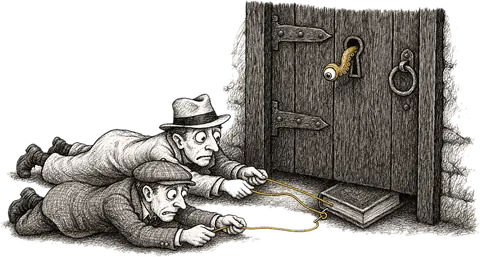
Your investigators are professors, journalists and insurance adjusters who lose sanity, pick up phobias, and die to things they can't fight. This changes player behavior more than any other design choice I've seen. When combat is a losing proposition by default, players get genuinely clever. My group once spent forty minutes working out how to get a book out of a locked room without entering it, and it was the best session of that campaign.
Chaosium's scenario library is the industry's best. Masks of Nyarlathotep earns its spot on every "greatest campaign ever written" list, and the shorter collections work beautifully as one-shots.
5. Starfinder 2e

- Genre: Science fantasy
- Best for: Pathfinder players who want space opera, groups interested in starship crew play, sci-fi with organized play
- Complexity: High
What the evidence says: Shipped, not in playtest. Player Core arrived at Gen Con 2025, with GM Core and Alien Core following by November 2025 to complete the core trio. 267 scheduled Gen Con 2026 events, third-most of any system and within striking distance of Pathfinder's 320, though both counts lean on organized-play slots that fill a convention schedule faster than home games do.
One thing worth stating plainly, because it still gets miscategorised: Starfinder 2e is not a playtest. The playtest ran August through December 2024, and the real thing rolled out across 2025 on the Pathfinder 2e engine. Galactic Ancestries followed in April 2026. A Tech Core adding Mechanic and Technomancer classes is in the pipeline without a firm date as of July 2026.
Starfinder fills a gap that stays weirdly underserved: crunchy tactical sci-fi with organized play behind it. Starship combat is the love-it-or-hate-it piece. Each player takes a station role and the ship fight runs as a mini-game inside the session. When it clicks, you feel like a crew. When it doesn't, the pilot and gunner have fun while the science officer checks their phone.
One honest gap: nobody has published data on how much of the 1e base actually migrated. The old Adventure Paths still work fine, and some groups simply stayed.
6. Blades in the Dark

- Genre: Industrial-fantasy crime
- Best for: GMs who hate prep, and anyone who loves heist fiction or studies RPG design
- Complexity: Medium
What the evidence says: A modest player base with outsized influence. Forged in the Dark is now a peer lineage to Powered by the Apocalypse, and the line has real 2026 releases.
Every heist game had the same problem, and John Harper's flashback mechanic is what finally solved it. You don't plan the job for three hours. You start the job, and when something goes wrong you spend stress to declare you planned for exactly this. Sessions move.
For GMs this is close to the lowest-prep serious campaign game available. Faction clocks, heat, entanglements and structured downtime generate complications on their own. I've run Blades sessions on five minutes of prep that landed better than D&D sessions I spent four hours on, which was equal parts liberating and mildly insulting.
The prep Blades does ask for is a web: who owes whom, which faction is leaning on which, what the last score knocked loose. I kept one for my own Blades campaign on a Campaign Canvas built from my session notes, so when a faction flips after a score, the threads that quoted the old version get flagged instead of quietly going stale.
The line is busier in 2026 than it was in 2025. Deep Cuts, Harper's first official supplement, reached backers around December 2025. Blades '68, a roughly 450-page supplement jumping the setting forward a century into a 1960s "Age of Consensus," hits public retail on September 14, 2026 per Evil Hat's project status page.
7. Shadowdark

- Genre: Old-school fantasy
- Best for: Fast lethal dungeon crawls, GMs who want old-school play with modern rules writing
- Complexity: Low
What the evidence says: Four Gold ENNIEs in 2024 including Product of the Year, roughly $4M across two Kickstarters, a ~15,000-member Discord and ~14,800-member subreddit.
Shadowdark has outgrown being a bullet point in someone's OSR paragraph. The core Kickstarter took $1.37M from 13,249 backers in 2023. Western Reaches crossed $3M and 16,000 backers by early 2026. Bigger audience, bigger second act. That's a trajectory.
The pitch is old-school play written the way a modern designer writes. Real-time torch timers, where your light source burns for one actual hour at the table. Five-minute character generation. Lethality that's brutal but legible. Kelsey Dionne's rules writing is genuinely excellent, which matters more than it sounds like it should when you're teaching a system at 8pm on a Tuesday.
The Glass Cannon Podcast launching a Shadowdark campaign in October 2025 was a real exposure event. The publisher also claims 84 third-party crowdfunding campaigns for compatible content across 2024 and 2025, more than any RPG but 5e. Self-reported and unaudited, so weigh it accordingly.
8. Vampire: The Masquerade 5th Edition

- Genre: Personal and political horror
- Best for: Intrigue-heavy campaigns, groups wanting mature themes, GMs who prefer social encounters to combat
- Complexity: Medium
What the evidence says: Steady across the 2026 poll and LFG data, plus a real forward-looking announcement for the first time in years.
V5 asks a question most systems don't: what are you becoming? Your character manages a political hierarchy, a shrinking set of mortal relationships, and Hunger dice that make every session risk something you can't undo. The fifth edition redesign split longtime fans. Some loved the tightened rules, others missed the sprawling metaplot and said so loudly for years. It brought in a lot of new players either way.
The news worth knowing: it's V6. On July 30, 2026, White Wolf used its Gen Con panel to announce Vampire: The Masquerade 6th Edition, the first Vampire project developed fully in-house since the brand's 2025 relaunch. The edition number Paradox spent months declining to confirm is now official, and a free open alpha playtest went live the same day on Demiplane, covering seven of the fourteen planned clans. No release date yet. V5 is still the edition you can actually run, which is what the slot above reflects.
Prep for Vampire uses a different muscle. Fewer maps and stat blocks, more NPC motivations and faction pressure.
9. Cosmere RPG

- Genre: Epic fantasy (Brandon Sanderson's Cosmere)
- Best for: Sanderson readers, and groups who want a distinctive magic system with escalating stakes
- Complexity: Medium to high
What the evidence says: A record-setting Kickstarter raised $14-15M. Yet just 21 Gen Con 2026 events. Table share genuinely unproven.
Careful here. The interest is enormous and the play numbers barely move. Brotherwise's Kickstarter held the TTRPG crowdfunding record until 2026. Then look at the Gen Con 2026 catalog, where the game drew 21 scheduled events. Daggerheart, which launched the same year, drew 150. One of them is being played. The gap between a system people buy into and a system people run has never been easier to see than in that pair of numbers.
The Stormlight setting hit physical retail on November 12, 2025. Mistborn, the second of two planned settings, targets backer fulfillment around September 2026 and retail in the October-November window. Brotherwise designed it as a "living" RPG meant to expand as Sanderson publishes more novels, which reads as a long-horizon commitment rather than a license cash-in.
Explosive debut. Year two is the real test.
10. OSR systems (DCC, Old School Essentials, Dolmenwood)

- Genre: Old-school fantasy
- Best for: Minimal-prep sandbox play, resource-management dungeon crawls, GMs who want rules out of the way
- Complexity: Low
What the evidence says: Individually fragmented, collectively significant. Goodman Games states DCC is approaching 500,000 lifetime core-book copies, self-reported.
Ranking the Old School Renaissance is awkward, since it's a movement rather than a system. Leaving it out would misrepresent where a real chunk of the hobby plays, though. A typical OSR session runs three or four times faster than an equivalent 5e session. Character creation takes five minutes. Combat resolves in two.
Dungeon Crawl Classics keeps old-school lethality and adds chaos. The funnel gives each player three or four zero-level peasants, and whoever survives becomes your actual character. Randomized spell effects mean no two wizards cast alike.
Old School Essentials set the clean-layout gold standard, and in late 2025 it changed shape. Necrotic Gnome's October 2025 "OSE 2026 and Beyond" post confirmed the Classic-format printings are being discontinued, consolidating around an Advanced-based core as the definitive version going forward.
And then there's Dolmenwood, which is where the growth is. Necrotic Gnome's folkloric fairy-tale setting matured into a full three-book physical line that competes with major publishers on production value outright. One OSR purchase in 2026? Make it this.
Cairn deserves a mention but not a claim. Beloved, mostly free, and its commercial line only started formalizing via Cairn Press in June 2026.
Why do these systems win?
Four things predict staying power, and the fourth is quietly losing its grip.
Network effects. The biggest advantage in the hobby is that your players already know the rules. This is D&D's moat and it isn't shrinking.
Digital tool support. Foundry, Roll20 and Demiplane carry a large share of online play now, and whether a system is supported there is a real gating factor. Note the lock-in. Roll20 marketplace purchases stay on Roll20; Foundry-compatible publisher content tends to be portable. That shapes where a community clusters, and it's part of why Paizo pausing organized-play Foundry modules in June 2026 stings more than it looks.
Actual play and streaming. This is the promotion machine now. Most of the systems climbing this list got their first big audience from a show, not a shelf. Daggerheart got adopted by existing actual plays that switched to it, including Dungeon Dudes, Legends of Avantris and Acquisitions Incorporated. Shadowdark got the Glass Cannon Podcast. Want to predict what breaks out in 2027? Watch which shows switch.
Organized play, which is now a legacy advantage only. Adventurers League and Pathfinder Society still deliver a steady pipeline. But look at the growing systems: Daggerheart, Shadowdark, Cosmere RPG, Dragonbane, Draw Steel. Not one has a Society-style program. Their engines are actual play, crowdfunding-native launches, and Discord-first community building.
Three big names that didn't make the cut
All three show up on plenty of popularity lists. Here's why they aren't on this one.
Star Wars RPG (Edge Studio). The license is intact and Asmodee ran a big reprint wave in December 2025, so the game stays purchasable and the Fantasy Flight-era catalog runs indefinitely. But no all-new RPG book has shipped since 2019's Collapse of the Republic, and the promised "phase 2" supplements have been undelivered since 2021. The narrative dice are still among the best in the hobby. There's just no 2026 story to tell.
Shadowrun. Sixth edition's editing and Edge-mechanic problems stay unresolved and are still argued about in 2026 threads, with plenty of tables on 5e or house-ruling 6e heavily. Catalyst is alive and publishing, and Shadowrun: Anarchy 2.0 (a lighter variant funded in September 2025) is where publisher energy goes. Real thing, but not the crunchy 6e most people mean by Shadowrun.
Warhammer 40,000: Wrath & Glory. Cubicle 7's 40k line is genuinely active, with the Revised Core in print and supplements still landing. What keeps it off the list is that the 40k audience is split two ways. Wrath & Glory and Imperium Maledictum are both current, both Cubicle 7, and neither surfaces in any of the three datasets above. Good grimdark. No published number that would place it.
All three remain great settings. None has a current reason to top a popularity list.
How should you actually choose?
The ranking is a starting point. Here's what matters more.
Match the genre to your group first. A group that wants sci-fi will have more fun with an imperfect sci-fi system than a polished fantasy one. Ask before you buy anything.
Your prep tolerance matters more than the rankings do. D&D, Pathfinder and Starfinder all reward real investment in encounter design. Blades, Shadowdark and the OSR games run great on twenty minutes of notes. Already burning out? That second group is your answer.
Run a one-shot before you commit. Nearly everything here has free quickstart rules or a starter set. You don't need to spend $60 to find out whether a system clicks. The learning curve is the real cost of a one-shot, so I drop the quickstart PDF into a ScriptoriumGM campaign library first. Then a rules question at the table ("what does a desperate action cost?") gets answered from the actual book, quoted, instead of from my half-memory of a YouTube video.
Don't switch just because something's shiny. Changing systems costs learning time and campaign momentum. Worth paying when your current system actively frustrates you, not much before that. The momentum part hurts less if your notes aren't tied to the old system: NPCs, factions and session recaps carry over, and only the stat blocks need redoing.
For a longer walkthrough aimed at newer GMs, we have a guide on choosing your first TTRPG system. If platform support is your deciding factor, our virtual tabletop comparison covers where each system is best supported.
Worth watching (but not on the list yet)
Four I looked at hard and left off, with reasons.
Draw Steel (MCDM) is the closest call. Genuinely good tactical combat, a Steam VTT in early access since April 2026, roughly $4M across the core campaign and the $2.6M "Crack the Sun" follow-up, a ~43K Discord. Matt Colville himself has said publicly that most of the potential audience hasn't found the game yet. When that changes, this list changes.
Dragonbane (Free League) has the best repeat-funding pattern here. Its Trudvang campaign funded in four minutes in February 2026 and hit $150K in half an hour against a $25K goal. Scale is still thousands of backers, not tens of thousands.
Fabula Ultima crossed $1M on its Celebration Edition campaign, which coverage rightly framed as years of accumulated community affection rather than a launch spike. If you want a JRPG at the table, it's the one.
Dolmenwood is spotlighted inside the OSR entry, and it's what I'd bet on to earn a standalone slot of its own.
One more thing: TTRPG crowdfunding is booming independently of all this. Legends of Avantris' Neon Odyssey raised $16.1M from 49,116 backers by June 2026, the most-funded TTRPG Kickstarter ever, and Dungeon Crawler Carl pulled over $12M on BackerKit a month earlier. What crowdfunding measures is which creators can mobilize an audience, which overlaps with popularity without being the same thing.
The honest summary
D&D is first, Pathfinder is second, and everything below is genuinely contested for the first time in years. Buzz, crowdfunding totals and table presence keep pointing in different directions, which is exactly why this post triangulates instead of quoting one confident percentage. If a competing article hands you a market share figure to two decimal places, ask where they got it.
The hobby is in better shape than the data about it. More systems, more genres, better rules writing, more good ideas moving between all of them. That makes "what should we play next?" a harder question, which is a fantastic problem to have.
What's the last system you switched to, and did it stick? I'm especially curious about groups that tried Daggerheart or Shadowdark and either stayed or bounced back to 5e. Both outcomes are interesting.
Running games across multiple systems? Keeping lore, NPCs and session notes straight gets messy fast. ScriptoriumGM is system-agnostic. Upload the rulebooks for whatever you're running, bring your notes over (an Obsidian vault imports with its links intact), and the Campaign Assistant finds what you need during prep or mid-session, with sources shown so you know where the answer came from. It's free to start, no card needed: set up your first campaign.
Image credits
The illustrations for Dungeons & Dragons, Pathfinder, Starfinder and Call of Cthulhu are original artwork created for ScriptoriumGM.
Cover art for the other systems is © its respective publisher and shown here for editorial review: Daggerheart (Darrington Press, art by Dominik Mayer), Blades in the Dark (Evil Hat Productions, John Harper), Vampire: The Masquerade (Renegade Game Studios / Paradox Interactive, art by Tomas Arfert), Shadowdark (The Arcane Library, Kelsey Dionne), the Cosmere RPG (Brotherwise Games / Dragonsteel Entertainment) and Dolmenwood (Necrotic Gnome, art by Ulla Thynell).